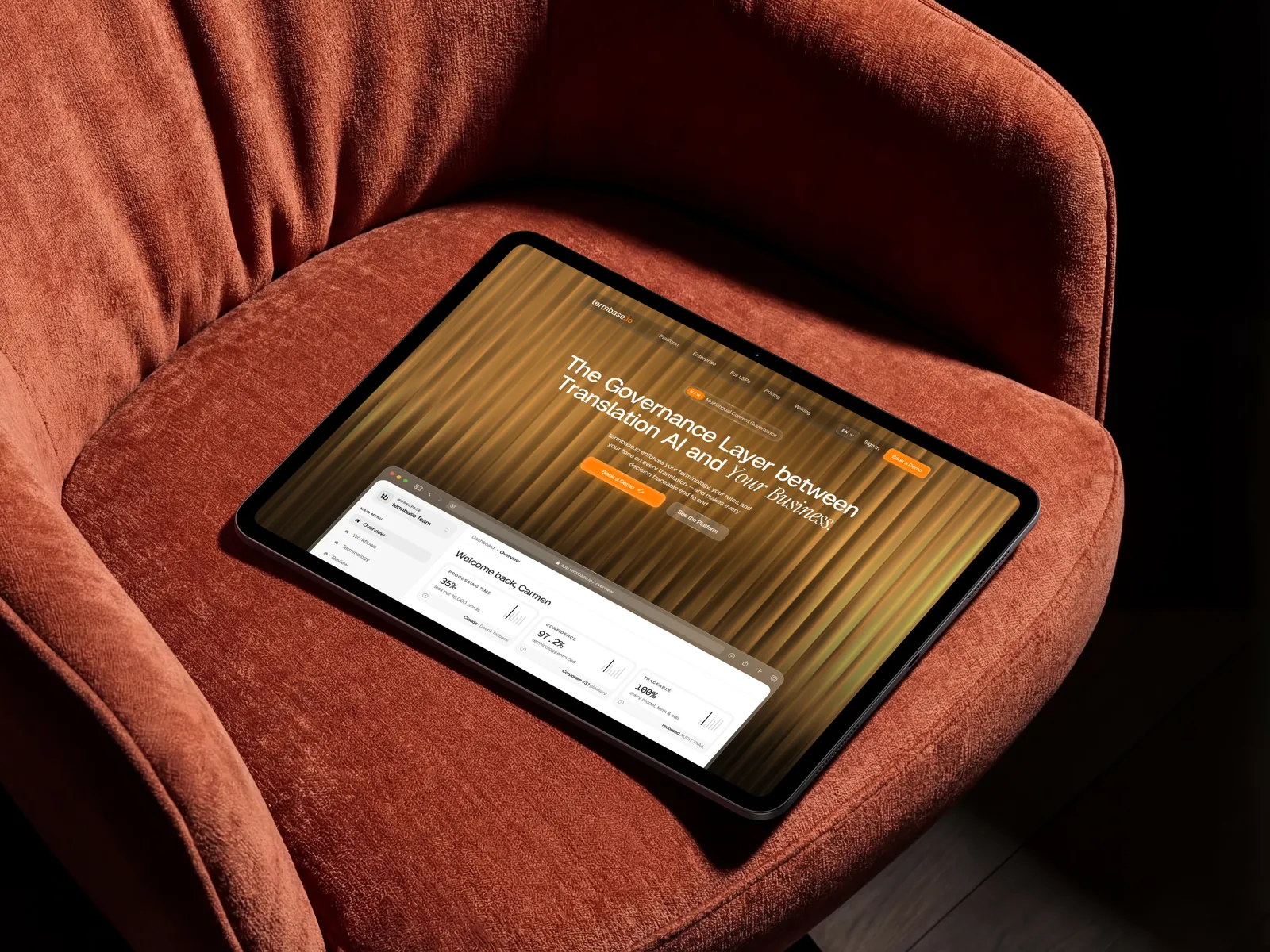
termbase.io
Turning a complex product into a clear go-to-market system.
Positioning, audiences, website and content. Not four separate assignments, but a shared foundation for going to market.
- Client
- Termbase
- Scope
- Positioning · ICP · Digital · Growth
- Market
- B2B · Language Technology
- Year
- 2026
Context
Termbase connects terminology, translation AI and company knowledge. The technical scope is substantial. But scope alone does not explain why a company needs the product.
The question
How do you make an offer clear when the audience first needs to recognise the problem behind the technology? A website redesign alone would not have answered that.
The work
Clarify the offer, structure different buying motivations and develop a shared logic for the website, communication and distribution.
Relevance first. Product second.
The work did not begin with page layouts. Product understanding, audiences and language had to align first: what does Termbase do for a business that a translation model alone does not?
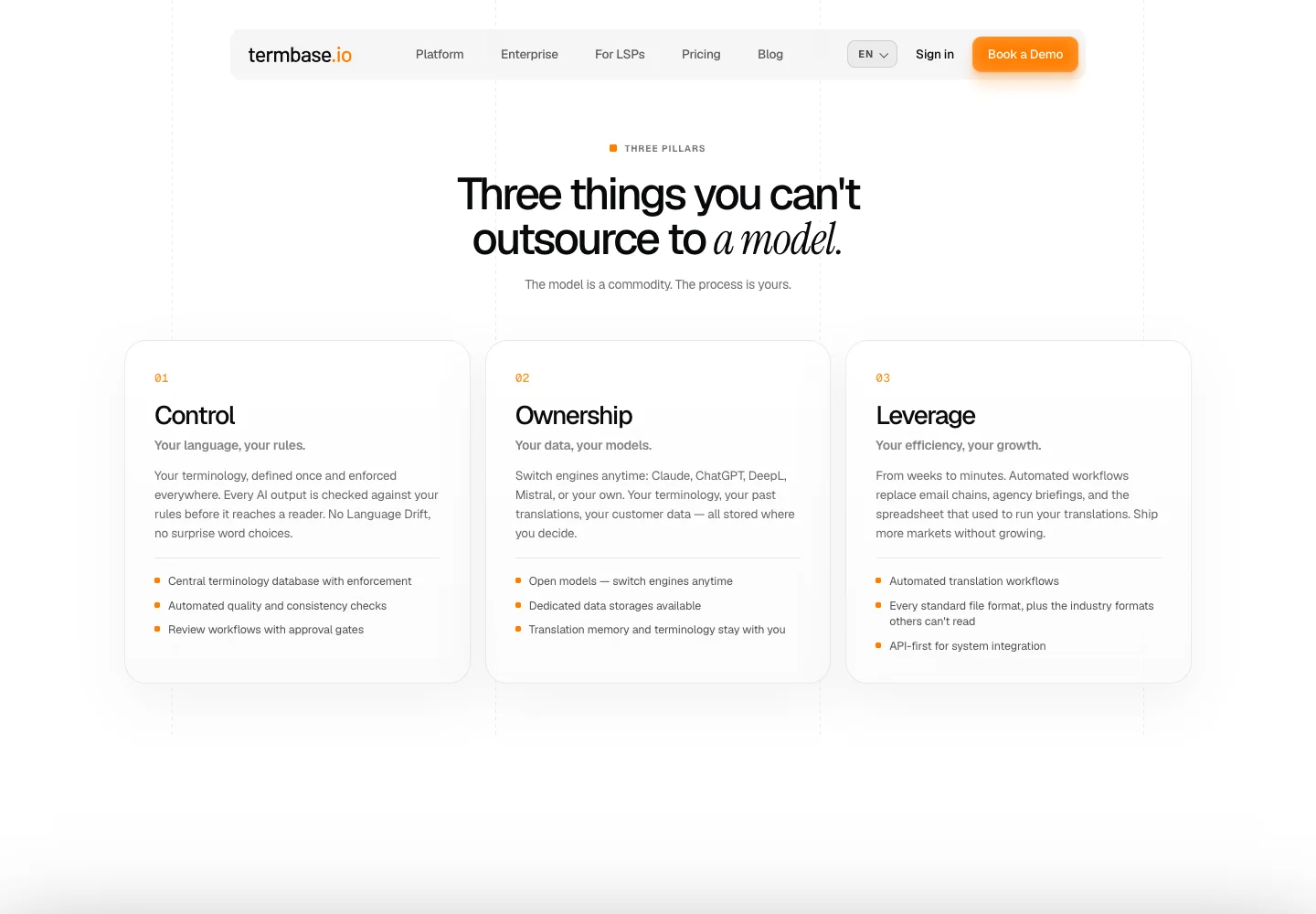
The public positioning now makes that role visible as a governance layer. Control over multilingual communication comes first. The technology then explains how that control works.
Positioning, value propositions and messaging were developed together. This created a reference point for evaluating a headline, a product page or a piece of sales copy.
- Category
- Where does the product sit between translation AI and the business?
- Reason to buy
- What improves for the people and workflows involved?
- Evidence
- Which product capability or use case makes the statement tangible?
One product. Different reasons to buy it.
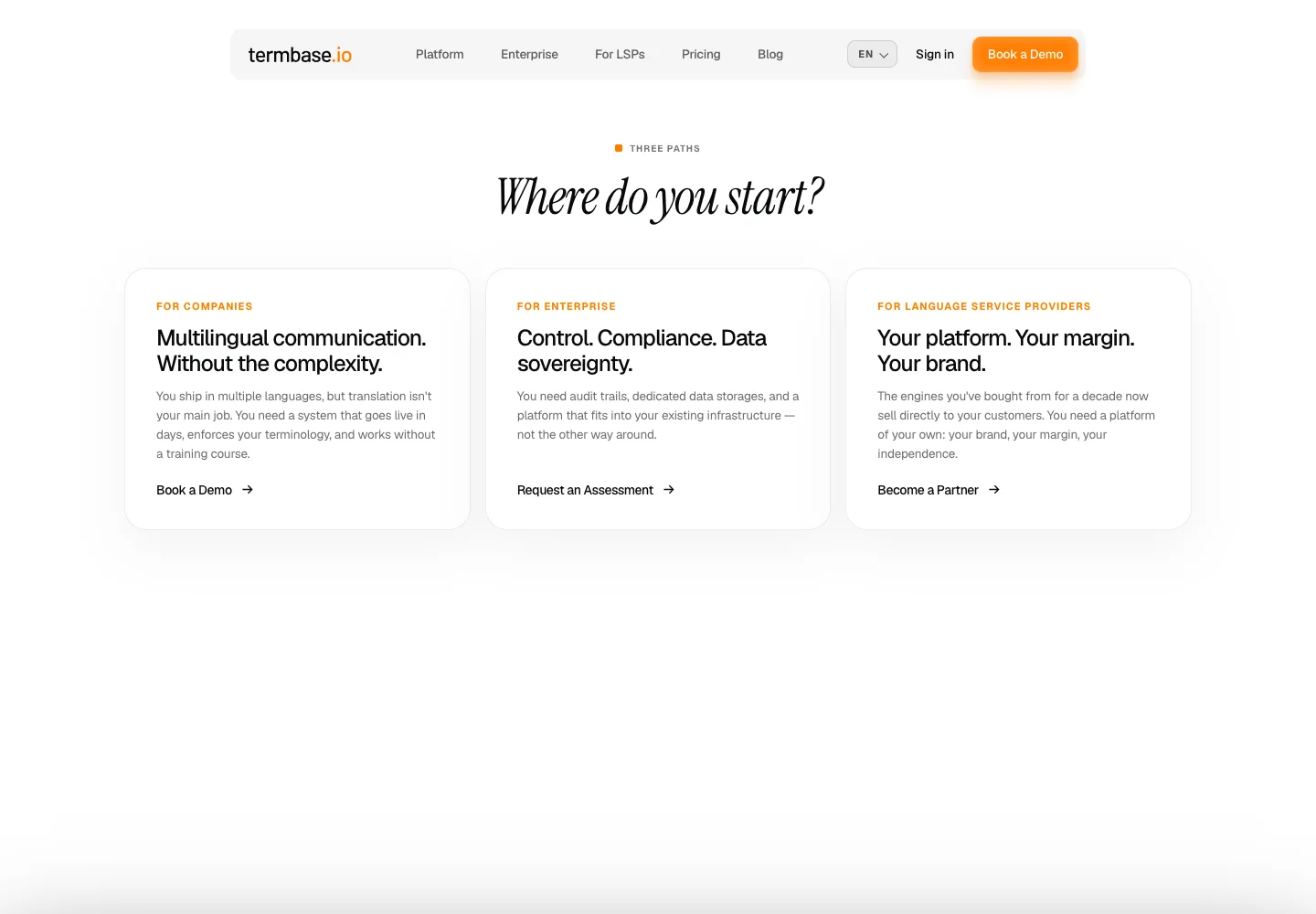
A specialist team asks different questions from a company with complex IT requirements. A language service provider evaluates the same product from another perspective again. A shared feature catalogue is not enough.
The ICP work structured problems, use cases, messages and buying arguments. That distinction creates different entry points without requiring the product to tell a different story each time.
- Companies
- From an everyday operational need to a relevant use of the product.
- Enterprise
- From organisational and technical requirements to an assessment of the platform.
- Language service providers
- From their own offering to Termbase's role in the business model.
The website follows the decision.
The information architecture translates positioning into a sequence: understand the relevance, recognise your situation, assess the platform and choose a next step.
The homepage, platform overview and audience-specific pages serve different purposes. Not every page needs to explain everything. What matters is that the transitions work and the underlying product logic stays consistent.
One idea works across several channels.
The engagement includes a content system for LinkedIn and longform. Not a calendar of isolated posts, but an editorial extension of the positioning: which questions deserve repeated attention from different perspectives?
Topic structure, roles and an editorial process give the work a repeatable framework. LinkedIn opens a topic. An article develops it. The website connects it to the product. Feedback from conversations gives the next publication its starting point.
- 01
Point of view
A relevant market question and a recognisable perspective.
- 02
LinkedIn
A focused idea that can open a discussion.
- 03
Longform
Context, connections and examples that need more space.
- 04
Website & search
Lasting, discoverable content connected to the offer.
- 05
Conversation
The connection between a topic and a specific business situation.
- 06
New questions
Feedback as a starting point for further content.
The product is complex. Going to market should not be.
The work established a shared foundation for positioning, audiences, digital and growth. The result is not a collection of individual assets, but a system that the website, communication and further growth work can build on.
- Clearly positioned
- One product story rather than disconnected messages.
- Translated into digital
- A website that addresses different questions and brings them back to the offer.
- Ready to build on
- A content framework that gives the next publication a starting point.